Bellevue, Seattle, Breast Augmentation (Breast Implants)
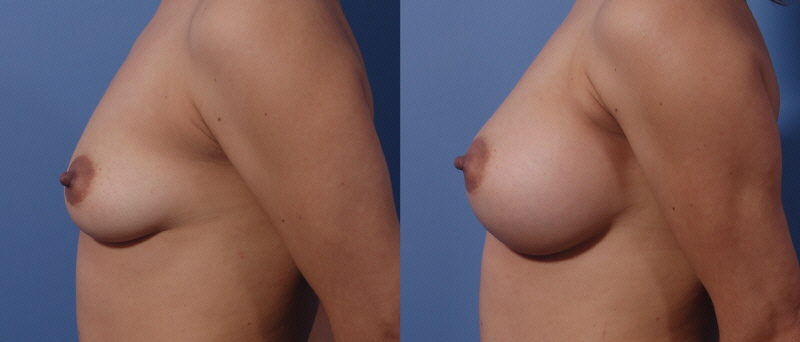
Breast augmentation (breast implants, breast enlargement, augmentation mammoplasty) is a surgical procedure which can provide satisfying, effective results:
- to improve body image for woman who feels her breasts are too small
- to achieve balance because of a difference in breast size or shape
- to restore shape after pregnancy or weight loss
- to provide lift for breast that are sagging (see breast lift, mastopexy)

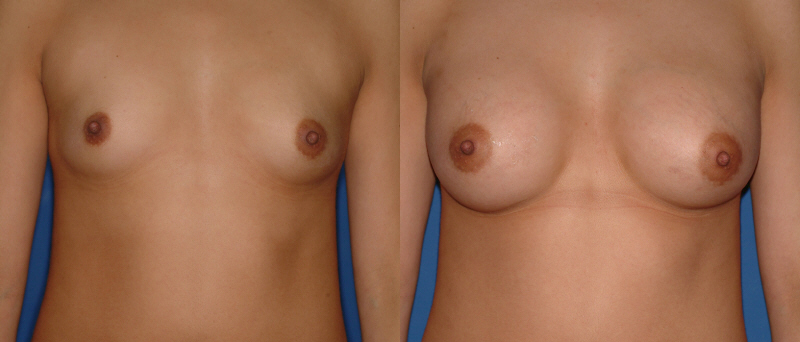
Before/After
Before/After
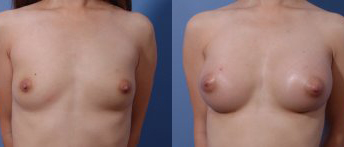
Pre-operative Consultation
At the Bel-Red Center our patients are encouraged to become active participants in the decision process regarding any surgery. Dr. Zemplenyi will discuss your options in detail, including:
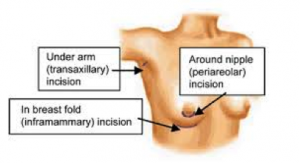
- Choice of the incision: under the breast (infra-mammary), in the underarm (trans-axillary), through the nipple (peri-areolar) or through the navel (T.U.B.A. – Trans-Umbilical-Breast-Augmentation)
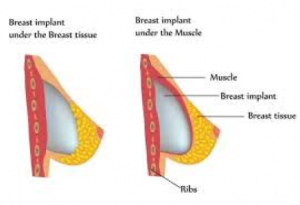
- Position of the implant: under the breast (submammary or subglandular) or under the Pectoralis muscle (subpectoral or submuscular)
- Selection of the implant type: saline versus silicone gel, covered either with smooth versus textured implant surface
- Implant size and shape: implant volume, shape and profile (teardrop or tapered shape) to best meet expectations
- Indications for a breast lift (mastopexy) with or without implant
The doctors at the Bel-Red Center for Aesthetic Surgery are familiar and well-trained in all routes of implant placement and will provide recommendations while always respecting your desires. Dr. Zemplenyi is one of only a few surgeons in the Puget Sound region to offer T.U.B.A. (Trans-Umbilical-Breast-Augmentation) surgery for selected patients. In this method the implant is inserted through the belly button, leaving no scars on the breast and only a small scar hidden inside the belly button. Dr. Zemplenyi will help you decide if you are a candidate for the small incision TUBA procedure. As part of your pre-operative evaluation we will-
- evaluate your general health status
- obtain a baseline mammogram, sometimes with an ultrasound examination
- take your photographs for the medical records
- take measurements of the breast size and shape
For Natural Breast Augmentation With Fat Grafting Click Here
Surgery & Anesthesia Breast augmentation
As with all surgeries, patient comfort and safety are paramount. Since all levels of anesthesia are available in our State-licensed, Medicare-certified surgical facility, Bel Red Center for Aesthetic Surgery is able to tailor the technique and anesthesia to your needs. Breast augmentation is most frequently performed under general anesthesia though it may be done in the twilight sleep (sedation anesthesia) in some instances. Depending on the procedure type, the implant may be placed either directly behind the breast tissue (sub-mammary or sub-glandular placement) or under the pectoral muscle (sub-pectoral).
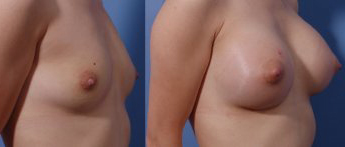
Before/After
Before/After
After Your Breast Surgery
For a few days following breast augmentation, you are likely to feel soreness and tenderness in the chest area. A mildly compressive dressing placed over the breasts is removed several days after surgery. Light, non-strenuous activity can then be resumed in a few days with regular daily responsibilities performed in one to two weeks. Restrictions on heavy lifting remain for about six weeks after the breast surgery. This timing varies for each individual and the doctors at Bel-Red Center for Aesthetic Surgery will discuss with you your expected recovery time and any limitations. The final cosmetic result following breast augmentation is not achieved for several months until the pocket around the implants matures and residual swelling resolves.
Breast Augmentation FAQ
- What is breast augmentation?
- Breast augmentation (augmentation mammoplasty) procedures increase the size of breasts or restore the shape and volume of breast tissue lost in pregnancy or weight loss. This can be accomplished with breast implants or transfer of your own fat (fat transfer breast augmentation). Augmentation can:
- Increase the size or projection or your breasts
- Correct a difference in breast size or shape
- Restore shape after weight loss or pregnancy
- Increase your self-esteem and self-confidence
- Balance out your figure
- What are the available types of breast implants?
- Saline Implants Sterile salt water filled (saline implants) are FDA-approved for woman over 18 years of age. They have a firm feel and uniform shape. If they leak the saline implant collapses with the sterile saline fluid naturally absorbed by the body. Silicone Implants Silicone breast implants have been FDA-approved for women over 22 years old since 2006 after years of studies concerning their safety and performance. The silicone implant has a more “natural feel”, feeling more like breast tissue, than saline implants. If leakage develops, the implant does not collapse and the silicone remains in the implant shell or in the implant breast pocket. Another type of silicone breast implant is the gummy bear implant. The silicone gel inside this implant is thicker than that of standard silicone implants, giving the implant a firmer feel and allowing the implant to hold its shape even if the implant shell ruptures. The type of implant and profile of the implant will be thoroughly discussed with you during your pre-operative visit. Dr. Zemplenyi has sample implants sizers which can be tried out to visualize the available options for the desired volume and profile. Fat-transfer breast augmentation Transferring one’s own fat into the breast is a third, natural option for increasing breast volume. The fat removed during body sculpting liposuction can be placed in the breast to augment its volume in a natural fashion. It allows about a one cup increase is breast size.
- How can I prepare for breast augmentation surgery?
- During your initial consultation your options for implant type, incision location and implant placement will be thoroughly discussed. Implant sizers will be used to determine the implant size and profile to best fulfill your needs and expectations.
You will undergo exam and tests including:
- Examination of your overall health status
- A baseline mammogram
- Photographs to be included in your records
- Measurements of your breast size and shape
- Stop smoking
- Not use aspirin, anti-inflammatory medications, herbal supplements or vitamin E for at least ten days since all can increase bleeding tendency
- Arrange for a reliable adult to pick you up after surgery and stay with you at least overnight
- What is the anesthesia used during breast augmentation surgery?
- Breast augmentation surgery is an outpatient procedure with patients discharged home about an hour after the procedure. Anesthesia can be IV sedation or general anesthesia. Both types are available in our state-licensed and Medicare-Certified surgical center. These options are discussed with the patient during the pre-operative consultation. For general anesthesia we use experienced, board certified anesthesia providers who are dedicated to safety and comfort in our outpatient surgical setting.
- Where are the incisions for breast implants made?
- Incisions for breast augmentation can be made in three areas. They are positioned to conceal and minimize scarring.
- Transaxillary (in the armpit)
- Periareolar (around the nipple)
- Inframamary (in the breast fold)

A fourth incision site through the belly button exists, but is infrequently used. Saline and silicone implants can be placed either under or over the chest wall (pectoralis muscle). The placement of the incisions and position of the implant depends on patient preference as well as the type and size of the implant. The choices and the benefits and negatives will be discussed with the patient during the pre-operative consultation. - What can I expect during the breast implant/augmentation procedure?
- The majority of breast augmentation surgery is done in outpatient surgical facilities under general anesthesia.
- There will be a small incision made in one of the sites previously discussed with the surgeon.
- The selected implant, saline or silicone, will be inserted in a pocket made either under the breast tissue or under the muscle.
- The chosen implant will reflect the size and profile that will best complement the patient’s proportions and fulfill her desired augmentation.
- Dr. Zemplenyi uses a special device, the Keller Funnel, for gentle implant insertion to decrease the chance of skin contact and bacterial contamination.
- Incisions are closed in layered fashion with dissolvable sutures.
- Incision lines will fade over time.
- What can I expect post-procedure? What is the recovery time?
- You will likely experience some tenderness and soreness in the chest area which can be controlled with oral medication.
- You will be given an elastic bra for comfort and to support the breasts while healing.
- You will be able to return to non-strenuous activities within a few days, and to a normal routine after one to two weeks.
- Heavy lifting is not advisable for about six weeks after surgery.
- Final results but will evolve over a couple of months as the breasts heal and assume their final position.
- What are the risks associated with breast implants or augmentation?
- Possible complications and risks of breast implants include:
- Revision surgery
- Capsular contracture or scar tissue formation around the implant
- Breast pain
- Changes in nipple and breast sensation
- Rupture and deflation of saline-filled implants
- Infection
- Complications of anesthesia
- How much do breast implants cost?
- The cost for breast augmentation will differ depending on the type of implant you choose and will be discussed during your initial consultation.
Free Download! The Anatomy of the Facial Aging Process:
Download this patient tool now to learn how you can combat the facial aging process with facial rejuvenation treatments.
I had such a positive experience here with Dr. Z and his staff. From the initial consultation to my post-surgery appts. I couldn't have asked for a better experience. All my questions/concerns were addressed, the surgery itself went really well (and I am so happy with my results, seriously life changing), my recovery went smoothly and Dr. Z gave me his personal cell # so I could reach out if I had any worries during my recovery. Dr. Z and his staff truly care about their patients and go above and beyond to deliver the best results! I highly recommend coming here if you need any aesthetic surgery, you won't be disappointed.